Season the veal shanks with salt and pepper,
then brush both sides lightly with Dijon mustard.
Heat the peanut oil in a Dutch oven or heavy casserole.
Sear the veal shanks and marrow bones over high heat
until well browned on both sides. Remove from the pan
and set aside.
Add a little more oil if necessary, then add the onion,
garlic, carrots, celeriac and tomatoes. Roast the
vegetables well until they begin to develop a deep,
rich colour.
Add the tomato paste and continue roasting until it
becomes dark and caramelised, taking care not to let
it burn.
Deglaze with a little red wine and allow the liquid
to reduce. Repeat this process several times, gradually
adding the remaining wine until the vegetables have
developed a beautiful dark-brown colour.
Dust with the flour and mix everything thoroughly.
Add the thyme and bay leaf, then pour in the veal stock.
Return the veal shanks and marrow bones to the casserole
and bring everything to the boil.
Cover and braise in the lower half of an oven preheated
to 180°C for approximately
1½ hours, or until the meat is
beautifully tender.
Before serving, remove the thyme and bay leaf and adjust
the seasoning with salt and pepper if necessary.
Gremolata
Finely chop the parsley, lemon zest and garlic.
Mix everything together with a little sea salt.
Spoon the fresh gremolata over the hot veal shanks
just before serving.
As a side dish, I served freshly made mashed potatoes
and glazed carrots.
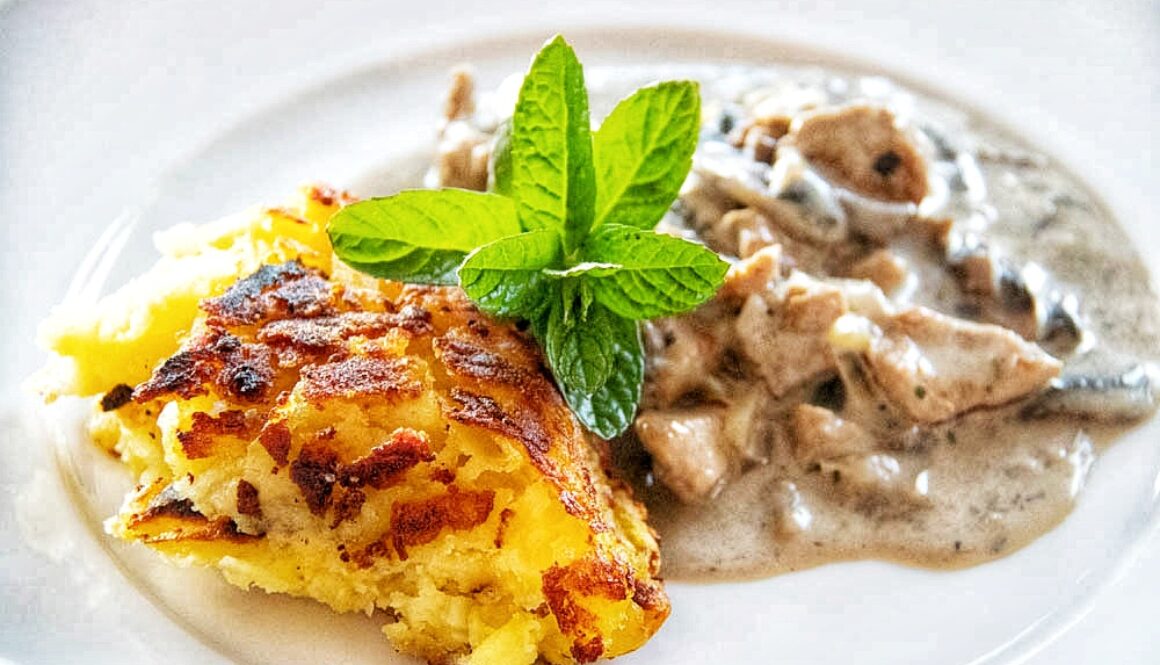
Tender sliced veal in a creamy white wine and mushroom sauce,
served with traditional Swiss butter rösti.
Swiss cuisine is known for its simplicity, quality ingredients and timeless classics.
Few dishes represent this tradition better than Zürcher Geschnetzeltes.
Tender strips of veal are gently cooked in a creamy white wine sauce with mushrooms
and served alongside crispy, golden butter rösti.
Method
How to do it
Heat a little peanut oil in a large frying pan until very hot.
Briefly sear the veal strips à la minute together with the onion and garlic.
Season with salt and pepper.
Remove the meat from the pan and keep warm.
In the same pan, sauté the mushrooms until lightly browned.
Season with salt and pepper, then remove and keep warm.
Deglaze the pan with the white wine and allow it to reduce slightly.
Stir in the flour. Alternatively, you can lightly coat the raw veal
strips with flour before frying.
Add the cream and veal stock and allow the sauce to simmer gently.
Add any juices released from the meat and mushrooms for extra flavour.
Reduce the heat and cook for about 3 minutes.
Taste and adjust the seasoning if necessary.
Finish with a little extra cream if desired.
Return the veal and mushrooms to the sauce and warm through gently.
Do not allow the meat to boil, otherwise it may become tough.
Arrange the sliced veal on warm plates and serve immediately
with a crisp, golden butter rösti.
Alessandro’s Note:
The secret to authentic Zürcher Geschnetzeltes is a very short cooking
time for the veal. Sear it quickly over high heat and return it to the
finished sauce only at the very end.
Slowly simmered over an open fire, this hearty Hungarian goulash
combines rich paprika, tender beef, red wine and the unmistakable
atmosphere of cooking under the open sky.
Serves4
Prep Time30 min
Cook Time90 min
Total Time2 hours
Cooking under the open sky
A dish made for fire, time and good company
A classic Hungarian goulash is wonderfully straightforward to prepare.
Once everything is in the pot, it can slowly simmer while you turn your
attention to the side dishes and enjoy the atmosphere around the fire.
Cooking over an open fire naturally requires a little more attention.
The fire needs to be maintained and fed with wood, but that is also part
of the experience. If you have the space and the opportunity, it is
absolutely worth trying.
Many side dishes work beautifully with goulash. Potatoes can be added
directly to the pot towards the end of cooking, or you can serve it with
garlic bread, mashed potatoes or traditional bread dumplings.
Let your imagination lead the way.
Ingredients
4 onions
Traditionally, use approximately the same weight of onions as meat to naturally bind the sauce.
3–4 garlic cloves, chopped
2 red peppers, cut into pieces
2 large tomatoes, roughly diced
800 g stewing beef, cut into cubes
2 tbsp olive oil
2 tbsp sweet paprika powder
1 pinch chilli flakes
2 tbsp tomato purée
500 ml red wine
400 ml beef stock or water
Salt, to taste
Freshly ground pepper, to taste
Cornflour, if needed to thicken the sauce
Method
Peel and halve the onions, then cut them into strips.
Peel and slice the garlic. Cut the red peppers and tomatoes
into bite-sized pieces.
If the beef pieces are very large, cut them into smaller cubes
according to your preference.
Light the fire early enough to allow a strong, steady heat to develop.
The pot needs consistent heat throughout the cooking process.
Hang the casserole over the fire. Add the olive oil and allow it to heat.
Add the beef and brown it thoroughly.
Add the onions and garlic and sauté well until softened and fragrant.
Add the tomatoes and red peppers and continue sautéing.
Sprinkle over the sweet paprika and chilli flakes.
Add the tomato purée and mix thoroughly.
Deglaze with the red wine, then add the beef stock or water.
Stir well and bring everything to a gentle simmer.
Cover and simmer for approximately 1 hour. Check the meat:
if it is not yet tender, continue cooking until beautifully braised.
Remove the lid and allow the sauce to reduce to your preferred consistency.
If the sauce remains too thin, mix a little cornflour with red wine
until smooth and stir it into the goulash. This will also give the sauce
a beautiful gloss.
Season with salt, pepper and additional chilli flakes to taste.
Fire Cooking Tip
Maintain a steady fire rather than an excessively hot flame.
Slow, even heat gives the beef time to become tender and allows
the flavours to develop beautifully.
Urban Fire Cooking
From the fire to the table
Jó étvágyat!
Serve the goulash hot with your favourite accompaniment.
It is especially delicious with homemade bread dumplings,
mashed potatoes or rustic garlic bread.