Alessandro Cipriano · My Story
Adoption, Identity
& Belonging
A personal journey through family, identity and the search for my biological roots — without ever losing sight of where I belong.
Some stories begin with what we know. Others begin with questions. Mine is a story about both — about the family who gave me a loving home, the roots I discovered later in life, and the many pieces that gradually became part of one picture. I was born Alexander, grew up as André Gloor and, in 2009, adopted Alessandro Cipriano as my artistic name.
A Loving Home
Where my story truly begins.
I was born on 21 April 1969 in Switzerland as Alexander Bonaiti Bühler. At the age of two months, I was adopted by Annelies and Alfred Gloor, who became my mother and father and gave me the additional name André.
My parents gave me a loving and secure home from the very beginning. My adoption was never treated as something that needed to be hidden. When I was around five or six years old, they began explaining my story to me openly and with great care. They even used children’s books about adoption to help me understand what it meant.
Looking back, I remain profoundly grateful for that openness. It gave me the freedom to ask questions later in life without ever having to question where my home was or who my parents were.
My father Alfred passed away in 2021. The love, values and security my parents gave me remain an inseparable part of who I am today.
The First Questions
Where did I come from?
As I grew older, questions about my origins became more important. I began thinking more deeply about my identity when I was around seventeen.
There were only a few clues. One of them was my vaccination card, which carried the name Alexander Bonaiti Bühler — the name given to me by my biological parents.
Even something as simple as my exact time of birth was unknown to me for many years. Eventually I discovered that I had been born at 9:25 a.m.
Searching for my origins often felt like putting together a puzzle without knowing how many pieces were missing. Some answers came relatively quickly. Others would take many years.
Searching for My Roots
Some doors take time to open.
In 2000, at the age of thirty, I contacted an office in Bern hoping to learn more about my biological family.
My biological father was located, but at first I received very little information. I learned that my biological mother had already died and that my biological father did not wish to have contact with me at that time.
It was difficult, but I did not abandon the search.
Three years later, in 2003, I tried again and contacted the relevant authorities in Bern and Zurich. This time, more pieces of the story began to emerge.
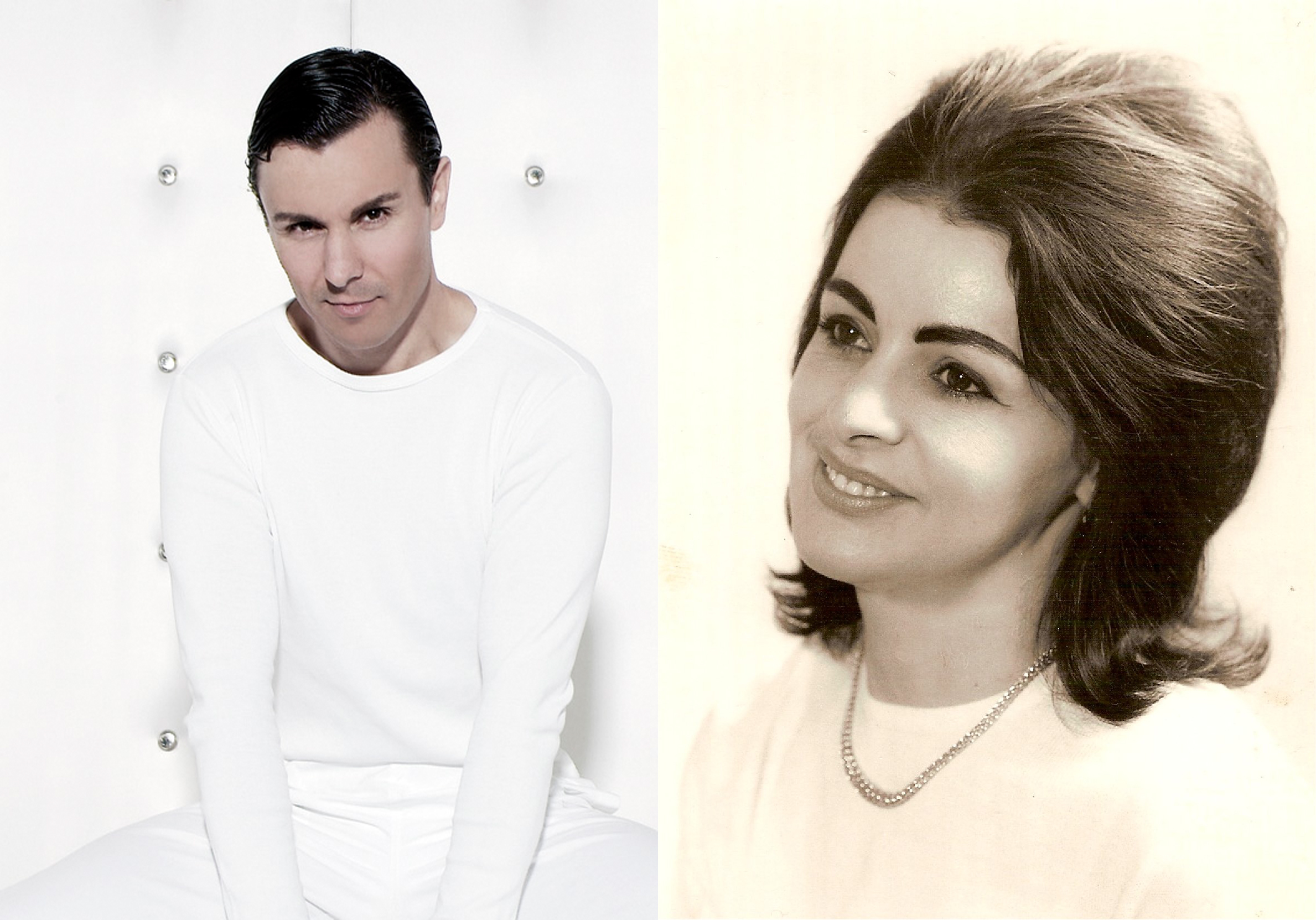
Chapter 04 · Maria Giulia
Discovering the woman who gave me life.
I discovered that my biological mother was Maria Giulia Bonaiti (1930–1977). She was born in Lugano and had Italian and Ticinese roots. Her father was Italian, while her mother came from the Italian-speaking part of Switzerland.
Maria Giulia died at only 47 years of age, long before I had the opportunity to learn about her and her life.
Through photographs, documents and information gathered over the years, however, I was gradually able to form a picture of the woman who had given birth to me — and of another part of my own history.
Discovering My Siblings
A family larger than I had ever known.
My search revealed something extraordinary: I had a much larger biological family than I had ever known.
I discovered three half-brothers and two half-sisters, as well as my biological brother Bruno, with whom I share both biological parents. One of my half-brothers has since passed away.
Only a few weeks after discovering one another, Bruno and I met for the first time.
Suddenly, a family history that had existed largely in documents, names and unanswered questions became real. Over time, relationships developed and people who had once been unknown became part of my life.
These discoveries did not replace the family in which I had grown up. They expanded my understanding of my own history.
Meeting My Biological Father
An encounter many years in the making.
One part of my search took considerably longer.
I continued trying to establish contact with my biological father. Although he had initially preferred not to have contact, I never completely gave up hope that we might one day meet.
After years of attempts, we finally met in August 2012.
It was another important piece of a story that had taken decades to uncover. The search required patience and there were periods when I needed to put it aside before finding the strength to continue.
I was not searching for another father. I was searching for answers about where I came from.
Becoming Alessandro Cipriano
Alexander became Alessandro.
My name had already been part of my story long before I consciously thought about identity.
I was born as Alexander Bonaiti Bühler. After my adoption, I grew up as André Gloor — the name under which I would later take my first steps as a singer and performer.
Years later, as I learned more about my biological roots and began reshaping my artistic identity, I found myself returning to the name Alexander — but in a form that reflected another part of who I had become.
Alexander became Alessandro.
The Italian form of the name felt natural to me. It connected with my Italian roots, my musical sensibility and the artistic direction I was beginning to follow.
At the beginning of 2009, I adopted the artist name by which I am known today: Alessandro Cipriano.
For me, the change was never about becoming someone else. It was about bringing together different parts of the same person — Alexander, André and Alessandro — into one artistic identity.
This name became a bridge between my roots and my artistic life — and remains the identity under which I create today.
Discover Alessandro Cipriano →What Adoption Means to Me
Every story is different.
My own experience has made me a strong believer in openness about adoption.
I believe children should be allowed to know their story and, whenever circumstances permit, should be supported if they later wish to learn more about their biological origins.
But there is no universal adoption story. Some people feel the need to search; others do not. Some questions arise during childhood, others much later in life. Each experience is individual and deserves to be respected as such.
I can therefore speak only from my own experience.
For me, searching for my biological roots was never a rejection of my parents. Quite the opposite. The love and security Annelies and Alfred gave me made it possible for me to ask those questions.
Their openness gave me the freedom to search without ever feeling that I had to choose between one family and another.
Chapter 09 · Gratitude
The people I simply call my parents.
Above all, I remain deeply grateful to Annelies and Alfred Gloor.
They gave me much more than a home. They gave me love, security and the freedom to become the person I wanted to be. They encouraged my ambitions, supported my artistic path and stood beside me through the different chapters of my life.
And when the time came for me to search for my biological roots, they did not stand in my way.
They stood beside me.
Discovering Maria Giulia’s history, finding my siblings and eventually meeting my biological father did not diminish what my parents meant to me.
If anything, the journey made me appreciate even more what they had given me from the very beginning.
My search for my biological roots was never a search for
different parents.
It was a search for another part of my own story.
Piece by Piece
One life. Many chapters.
It took many years to find answers to questions that had accompanied me since my youth.
There were setbacks, periods of waiting and moments when it seemed that certain doors might remain closed forever. Yet gradually, names became people, documents became family history and unanswered questions became conversations and encounters.
Perhaps the most important discovery was that one part of my life did not have to replace another.
The child raised with love by Annelies and Alfred could also discover the history of Maria Giulia and his biological family. Alexander Bonaiti Bühler could grow up as André Gloor and eventually find an artistic identity in Alessandro Cipriano.
Switzerland, my Italian and German roots, Vienna, my parents, my biological family and my artistic life all became parts of the same picture.
All these names, relationships, places and experiences belong to one life.
My life.